
践行 Toy React Hooks
终于到了用代码说话的时候了
这一篇主要以代码的形式去认知 React Hooks
开启 debug 模式
Algebraic Effects(代数效应)
通过 try/catch 语法来认识代数效应,在 getName 中抛出一个异常,穿透 mount,异常会在最近的 catch 块中被处理,这是异常机制的一个重要的特性:中间代码不需要关注异常的处理
下面注视的为原始代码,注释下面对应的是假设语法
当遇到 perform 之后,进入 handle 处理函数,处理完副作用后通过 resume with 抛出数据,并返回到 perform 继续执行
这样就把副作用分离出去了(代数效应可以把“做什么”和“怎么做”分离开)
js
function getName(user){
  let name = user.name;
  if(name === null){
    // throw new Error('no name');
    name = perform 'ask_name';
  }
  return name;
}

const user = { name: null };
function mount(){
  user.name = getName(user);
}

try{
  mount();
}
catch(error) {
  console.log('handle error:', error);
}
handle(effect) {
  if(effect === 'ask_name'){
    resume with 'Effect';
  }
}
Toy useState
接下来一步一步去实现 toy useState
先来看一下 react useState 的一个简单应用
jsx
import React, { useState } from 'react';
import ReactDOM from 'react-dom';

function schedule () {
  ReactDOM.render(
    <App />,
    document.getElementById('root')
  )
}

function App () {
  const [num, setNum] = useState(0)

  return (
    <div>
      <button onClick={() => setNum(num + 1)}>{num}</button>
    </div>
  )
}

schedule()
通过对一个 hook 的简单实用可以看出,在函数式组件中可以使用状态管理了
也没有了生命周期,究竟是什么黑魔法
接下来一点点的去实现
先实现一个能跑的简单版
js
/* ... */
let memoizedState = null
function useState (initialState) {
  memoizedState = memoizedState === null ? initialState : memoizedState
  const dispatch = (newState) => {
    memoizedState = newState
    schedule()
  }
  return [memoizedState, dispatch]
}
/* ... */
这时候会发现上面对 useState 的实现太单一化,只能满足一个 state 的情况
接下来基于数组实现一个满足多个 state 的 useState
jsx
/* ... */
let memoizedState = []  // 使用数组去缓存每个状态
let index = 0
function useState (initialState) {
  const currentIndex = index
  memoizedState[index] = memoizedState[index] === undefined ? initialState : memoizedState[index]
  const dispatch = (newState) => {
    memoizedState[currentIndex] = newState
    render()
  }
  return [memoizedState[index++], dispatch]
}

function schedule () {
  index = 0
  ReactDOM.render(
    <App />,
    document.getElementById('root')
  )
}
/* ... */
了解到实际 react 是用的单链表实现 hooks 的
接下来使用单链表进行实现
jsx
/*
  link: {
    val: 'value1',
    next: {
      val: 'value2'
      next: ...
    }
  }
*/
/* ... */
let isMount = true
let workInProgressHook = null
const fiber = {
  stateNode: App,
  memoizedState: null
}
function useState (initialState) {
  let hook
  if (isMount) {
    hook = {
      memoizedState: initialState,
      next: null
    }
    if (fiber.memoizedState) {
      workInProgressHook.next = hook
    }else {
      fiber.memoizedState = hook
    }
    workInProgressHook = hook
  }else {
    hook = workInProgressHook
    workInProgressHook = hook.next
  }

  const dispatch = (newState) => {
    hook.memoizedState = newState
    render()
  }
  return [hook.memoizedState, dispatch]
}

function schedule () {
 workInProgressHook = fiber.memoizedState
  ReactDOM.render(
    <App />,
    document.getElementById('root')
  )
 isMount = false
}
/* ... */
接下将更新函数抽离,并新增加更新链表
js
/* ... */
function useState (initialState) {
  let hook
  if (isMount) {
    hook = {
      memoizedState: initialState,
      next: null,
 queue: {
        pending: null
      }
    }
    if (fiber.memoizedState) {
      workInProgressHook.next = hook
    } else {
      fiber.memoizedState = hook
    }
    workInProgressHook = hook
  } else {
    hook = workInProgressHook
    workInProgressHook = hook.next
  }

 let baseState = hook.memoizedState
  if (hook.queue.pending) {
    let firstUpdate = hook.queue.pending.next
    do {
      const action = firstUpdate.action
      baseState = typeof action === 'function' ? action(baseState) : action
      firstUpdate = firstUpdate.next
    } while (firstUpdate !== hook.queue.pending.next)
    hook.queue.pending = null
    hook.memoizedState = baseState
  }
  return [baseState, dispatchAction.bind(null, hook.queue)]
}

function dispatchAction (queue, action) {
  const update = {
    action,
    next: null
  }
  if (queue.pending === null) {
    update.next = update
  } else {
    update.next = queue.pending.next
    queue.pending.next = update
  }
  queue.pending = update

  schedule()
}
/* ... */
ok了,一个简化版的 useState 就实现了
jsx
import React from 'react';
import ReactDOM from 'react-dom';

let isMount = true  // 手动处理 mount 生命周期
let workInProgressHook = null  // 当前工作的 hook
const fiber = {  // 一个 fiber 节点
  stateNode: App,
  memoizedState: null
}
function useState (initialState) {
  let hook
  if (isMount) {
    // mount 阶段
    hook = mountWorkInProgressHook(initialState)
  } else {
    // 更新阶段
    hook = updateWorkInProgressHook()
  }

  let baseState = hook.memoizedState
  // 如果有更新链表则进入循环链表 执行更新函数
  if (hook.queue.pending) {
    let firstUpdate = hook.queue.pending.next
    do {
      const action = firstUpdate.action
      baseState = typeof action === 'function' ? action(baseState) : action
      firstUpdate = firstUpdate.next
    } while (firstUpdate !== hook.queue.pending.next)
    // 本次更新完成
    hook.queue.pending = null
    hook.memoizedState = baseState
  }
  return [baseState, dispatchAction.bind(null, hook.queue)]
}
// mount 阶段 生成 hook
function mountWorkInProgressHook (initialState) {
  const hook = {
    memoizedState: initialState,
    next: null,
    queue: {  // 用于存储更新链表
      pending: null
    }
  }
  if (fiber.memoizedState) {
    workInProgressHook.next = hook
  } else {
    fiber.memoizedState = hook
  }
  workInProgressHook = hook
  return hook
}
// 更新阶段返回 hook
function updateWorkInProgressHook () {
  const hook = workInProgressHook
  workInProgressHook = hook.next
  return hook
}
// 将更新函数添加到更新链表中  环链表
function dispatchAction (queue, action) {
  // 更新数据
  const update = {
    action,
    next: null
  }
  // 环形链表  当前没有时自己指向自己
  if (queue.pending === null) {
    update.next = update
  } else {
    // 存在时 插入到当前指针的下一个
    update.next = queue.pending.next
    queue.pending.next = update
  }
  queue.pending = update

  schedule()
}
// 模拟调度器
function schedule () {
  workInProgressHook = fiber.memoizedState
  ReactDOM.render(
    <App />,
    document.getElementById('root')
  )
  isMount = false
}

function App () {
  const [num, setNum] = useState(0)
  const [num2, setNum2] = useState(2)

  return (
    <div>
      <button onClick={() => setNum(num + 1)}>{num}</button>
      <button onClick={() => setNum2(num2 + 2)}>{num2}</button>
    </div>
  )
}

schedule()
精力有限目前只研究到了 useState,剩下的还在继续探索
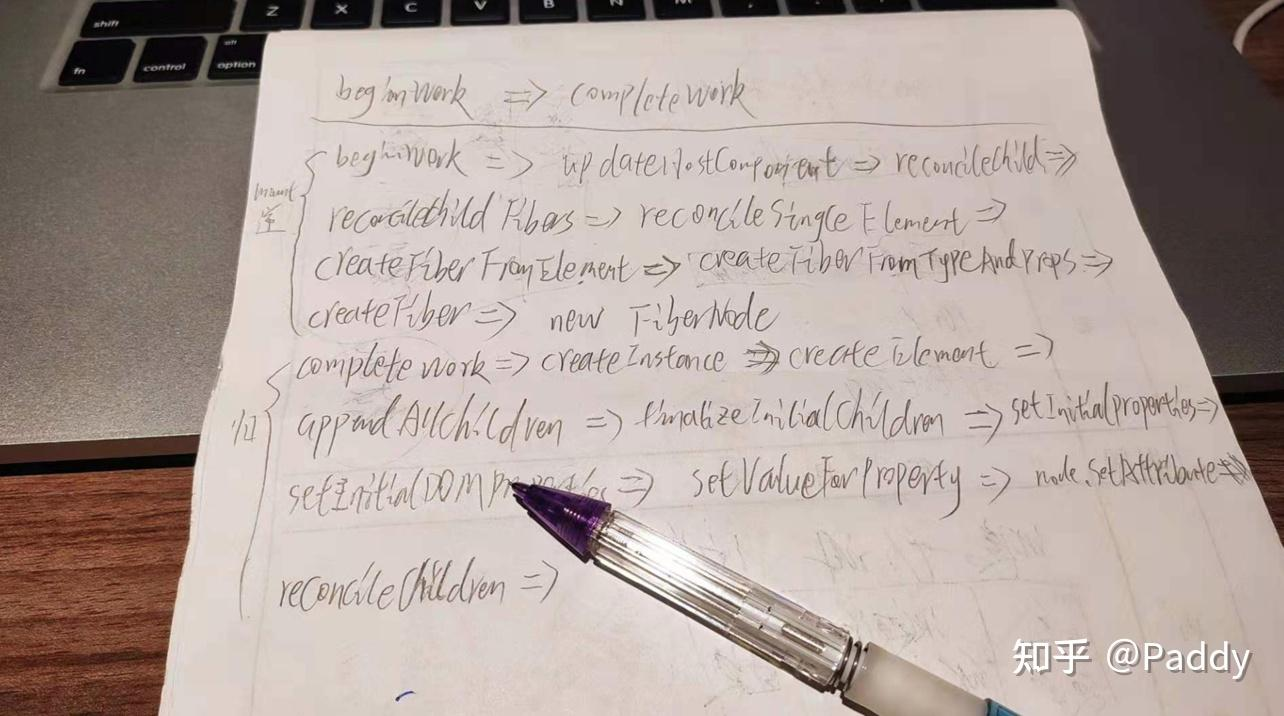
debug手稿